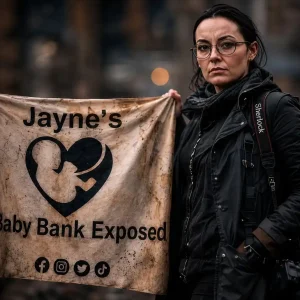

Five years of claims, changing timelines, public accusations and the evidence behind Jayne’s Baby Bank.
For years, Jayne’s Baby Bank has used Facebook as a running commentary on its activities, its disputes and the people it says have wronged it.
People have been accused of theft, stalking, harassment and other wrongdoing. CCTV has repeatedly been invoked. Authorities have been referenced. Health boards and social services have been presented as colleagues, partners or organisations connected to the work.
The investigation did not create those claims.
She posted it. We kept it.
That archive now makes it possible to compare what was said at the time with what can actually be established.
The recent posts show the pattern is still there
This is not simply historical material. The same behaviour continues in the most recent posts.
On 3 September 2026, JBB’s page described a critic in these terms:
“Another fake page made by Nicola Williams… stalker… fixated.”
The following day, the page published another post concerning Mary:
“Lovely cctv video of Mary walking past Commercial Street shouting abuse at us this morning.”
On 20 August, another post mocked a series of people or organisations apparently reporting or challenging JBB:
“Reporting us to the Bishop now! It was carpet right last week and CADW the week before!”
Other recent posts have referred to alleged “smear campaigns”, “stalkers”, people being “fixated” on JBB and critics supposedly attempting to damage the organisation.
In another recent dispute, JBB described its critics as being involved in a “smear campaign” while publishing material about individuals connected with the dispute.
The significance is not that every accusation must be decided by this investigation. The significance is that JBB has repeatedly used its own public platform to identify, describe and accuse other people.
The archive allows that behaviour to be examined in the organisation’s own words.
Mary: from theft accusations to CCTV claims
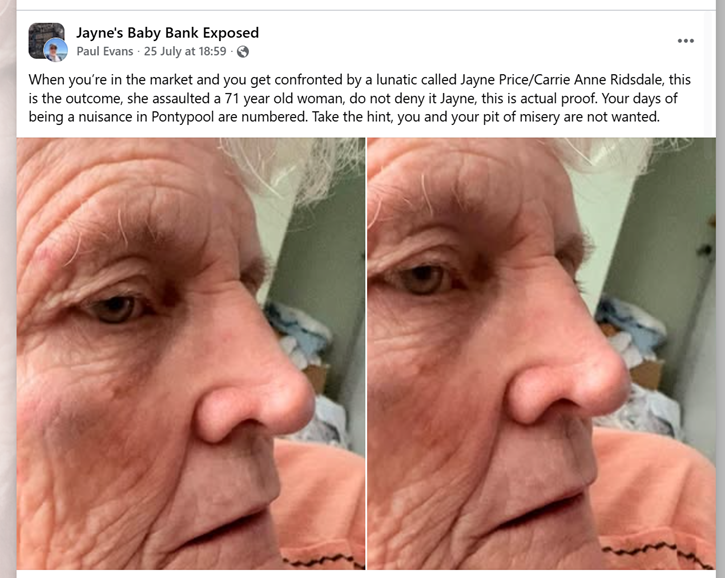
Mary is a particularly clear example of how this works.
JBB has previously stated that Mary and another person were banned from its premises in November 2024 over alleged theft. Those claims were subsequently repeated publicly, including references to jewellery allegedly being stolen and claims that CCTV had proved JBB’s version of events.
The dispute later escalated. In July 2026, JBB began posting again about Mary, including claims that she had physically attacked Carrie-Anne and repeated references to CCTV.
The reality of the incident is not something we need to reconstruct from Facebook. Carrie-Anne punched Mary. Mary subsequently attended hospital with an injury around the eye socket and concerns about potential nerve damage.
What is important for this investigation is what happened afterwards: the incident became another part of the continuing Facebook narrative, with CCTV repeatedly presented as supporting evidence.
CCTV: repeatedly invoked, never publicly produced
There is a recurring pattern throughout the archive.
JBB says CCTV exists. It says footage has been seen, sent to police or provided to other parties. It sometimes suggests that the footage proves what happened.
Yet the public audience is frequently left with the assertion rather than the footage itself.
We have not seen JBB publicly publish the CCTV footage it repeatedly refers to.
That does not mean that CCTV does not exist, nor does it mean that there may not be legitimate reasons for footage not to be published publicly. CCTV can contain private information and may properly be retained by police or other parties.
The point is much simpler: an audience cannot independently examine footage that has not been shown to it.
There is therefore a significant difference between saying “we have CCTV” and allowing people to establish for themselves what that CCTV actually shows.
The hostel post: when safeguarding becomes exposure
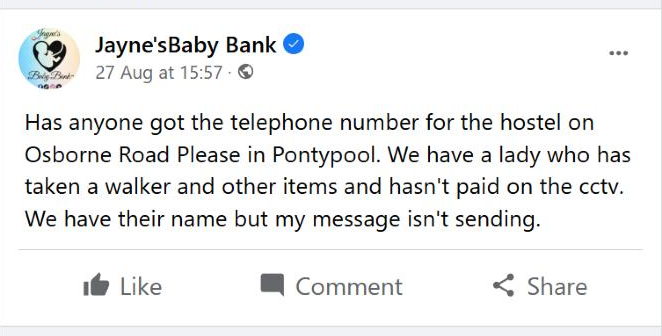
A more recent post raises an additional concern.
JBB publicly asked its followers for the telephone number of a hostel in Pontypool. The post described a person allegedly staying there who was said to have taken a walker and other items without paying. It also stated that JBB had the person’s name and referred to CCTV.
The issue is not simply whether the underlying allegation was true.
The issue is why an organisation that repeatedly presents itself as working with vulnerable people was publicly directing its audience towards accommodation associated with the person it was accusing.
We are not suggesting that the hostel was a secret location, nor that accommodation providers cannot be identified. The concern is the combination of the information published: the type of accommodation, the alleged resident, the accusation and a request for the public to help obtain the hostel’s contact details.
If an item had genuinely been stolen, there were established routes available. The incident could be reported to the police, the hostel could be contacted directly and any CCTV could be provided to the relevant authorities.
Instead, the matter became another public Facebook post.
That is particularly uncomfortable when the accommodation in question may be providing support to people who are vulnerable.
Safeguarding should protect vulnerable people. It should not turn their accommodation into a public extension of a Facebook dispute.
And then the description changed
The same post provides another example of why preserving the original material matters.
The person was initially described as a lady. Later material changed the description to a man.
That may appear to be a small detail, but it matters when an organisation has publicly asked its audience to help identify or locate somebody.
The archive preserves the original wording as it appeared at the time, allowing the sequence to be examined rather than relying on whichever version was published most recently.
The underlying allegation can be dealt with by the appropriate authorities. Our role is to document what was actually published and how the account developed.
Then there is the question of security
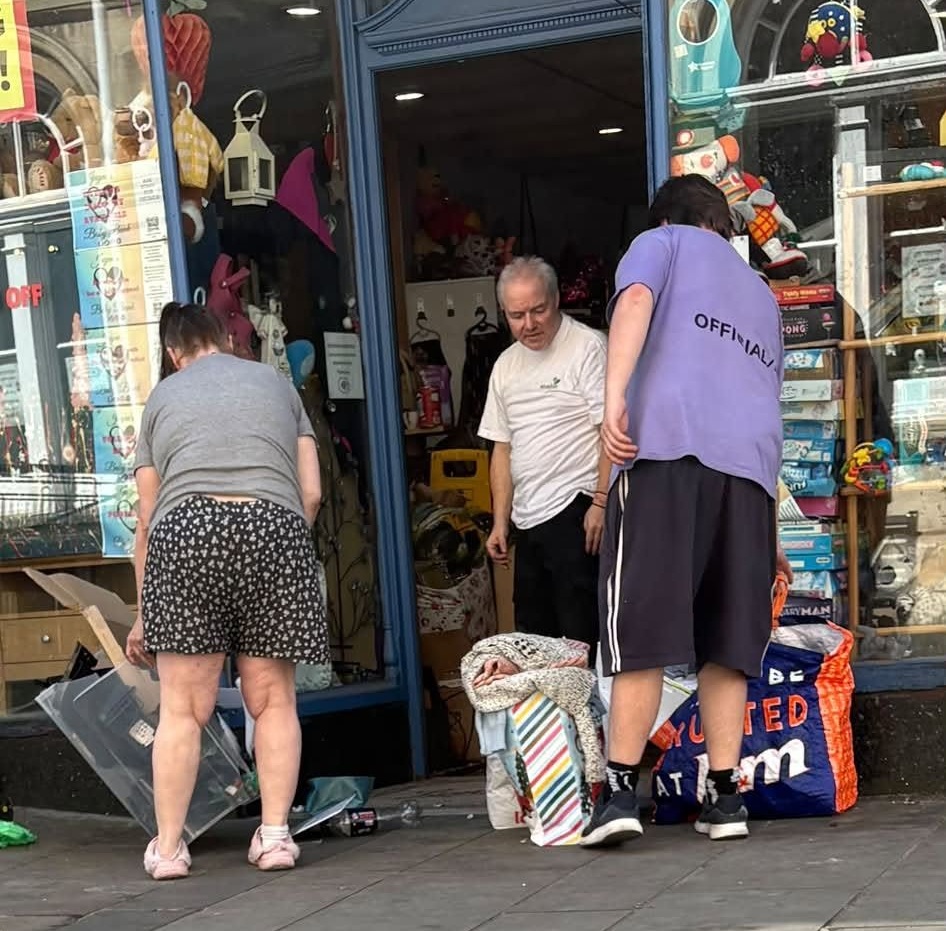
JBB has repeatedly referred to security arrangements around its premises. That makes the identity and background of people publicly associated with those arrangements relevant to the wider safeguarding picture.
The investigation has identified Raymond Derek Watkins, also publicly known as Ray Watkins and Patrick, as being associated with Jayne’s Baby Bank and its operations. Publicly available material documents an ongoing association, including appearances in livestreams and material showing him assisting with operational activities and customers. The investigation also holds additional evidence establishing that association.
There is a further fact that is important to record.
Raymond Derek Watkins is currently staying at 6 Commercial Street, the premises associated with Jayne’s Baby Bank.
The investigation has independently established his occupancy and access to the premises. The underlying evidence is not being published. This is deliberate. Publishing the material could disclose investigative methods, identify sources or expose private information that does not need to be made public for the underlying fact to be reported.
In other words, there is a distinction between what the investigation has established and what it is appropriate to publish.
There is also a documented criminal history that cannot simply be ignored when considering the question of security around an organisation presenting itself as working with children and vulnerable families.
Contemporaneous court reporting records that Watkins pleaded guilty to sexual assault of a 15-year-old girl and was sentenced to 15 months’ imprisonment. The court also imposed a Sexual Offences Prevention Order which prohibited him from working with children or being alone with any child under 16, alongside ten years of notification requirements.
The same reporting records convictions involving indecent images of children, while the judge made further remarks concerning the material recovered by police.
These are matters of historical court record, not allegations made by this investigation.
The investigation has also documented Watkins’ identity through historical websites, archived records, social media, public photographs, media reporting and public acknowledgements by JBB itself.
That association matters because JBB has presented itself as an organisation concerned with children, families, vulnerable people and safeguarding, while security has been part of the way its premises have been managed.
The question is therefore not simply who provides security. It is whether the people associated with security around an organisation serving vulnerable people are consistent with the safeguarding image that organisation presents publicly.
And then there is what the security figure publishes himself
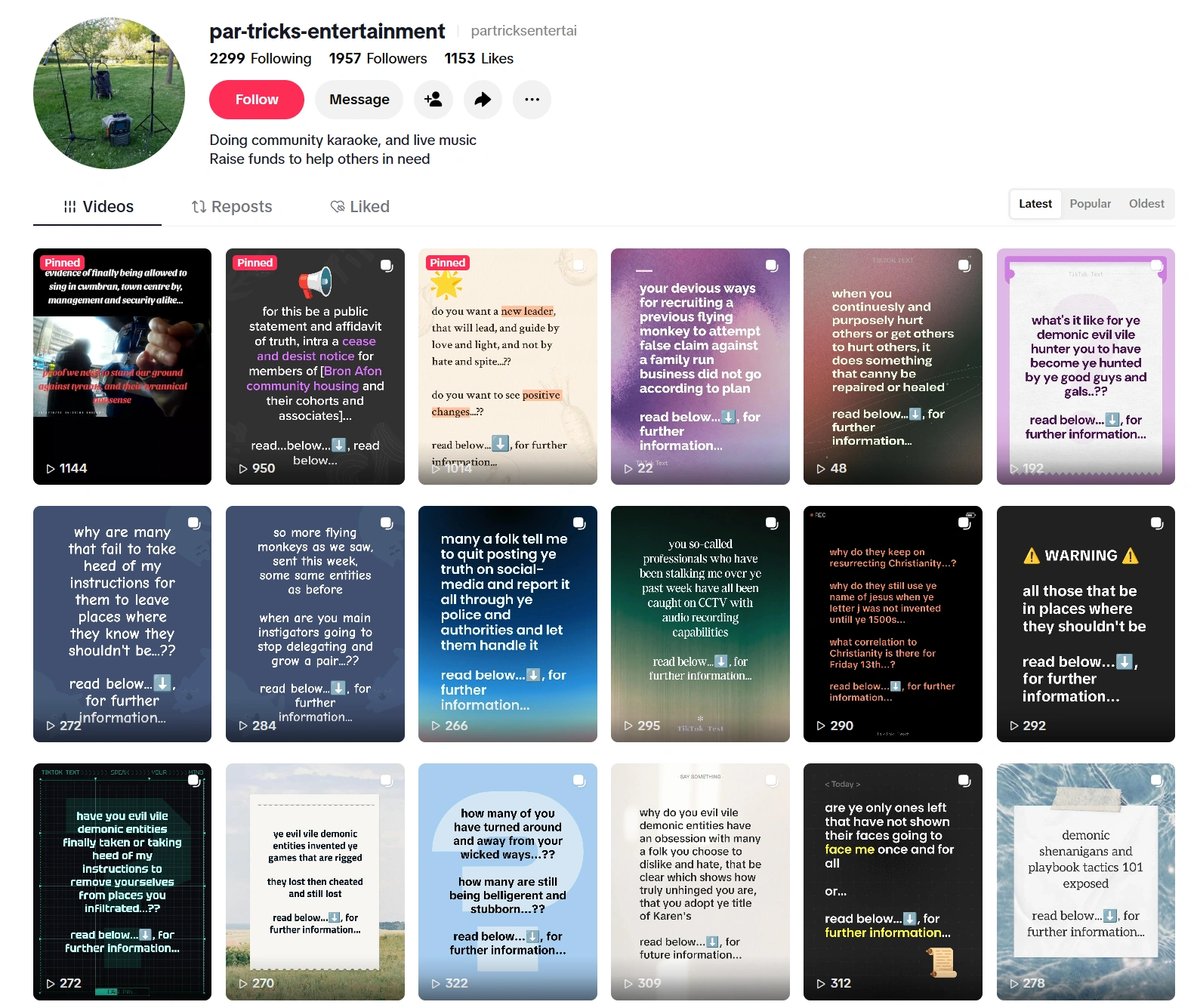
The material published through Watkins’ own online accounts provides further context.
It includes references to “cult members”, “demonic entities”, “well known liars”, “backstabbing”, alleged threats, claims concerning vulnerable children and repeated assertions about people supposedly attacking or targeting him.
One post refers to:
“demonic entities”
Another refers to:
“corpse-orations and their cult brotherhood”
Another describes people as:
“cult members flying monkeys”
The screenshot of this material is significant because it demonstrates the type of public content being produced by an individual the investigation has documented as associated with JBB and its operations.
The point is not to ridicule unusual language. The point is that this is public material from a person connected to the organisation.
When an organisation’s public image is built around safeguarding, the people it associates with and the material those people publicly publish are legitimate matters of public interest.
The health board claims
The same pattern appears in JBB’s claims about healthcare.
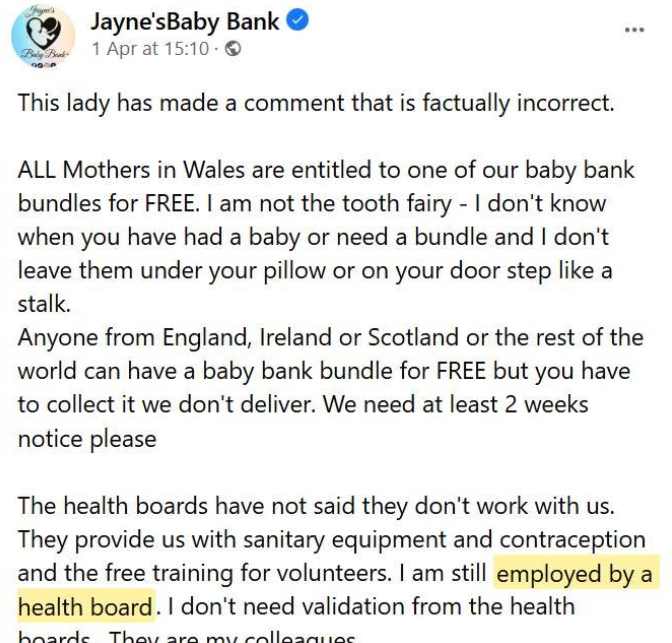
On 1 April 2026, Carrie-Anne stated that she was “still employed by a health board” and described health-board staff as her colleagues. The same post claimed that health boards provided sanitary equipment and contraception to JBB and provided free training for volunteers.
The claim was not presented as a vague possibility. It was presented as a current professional relationship.
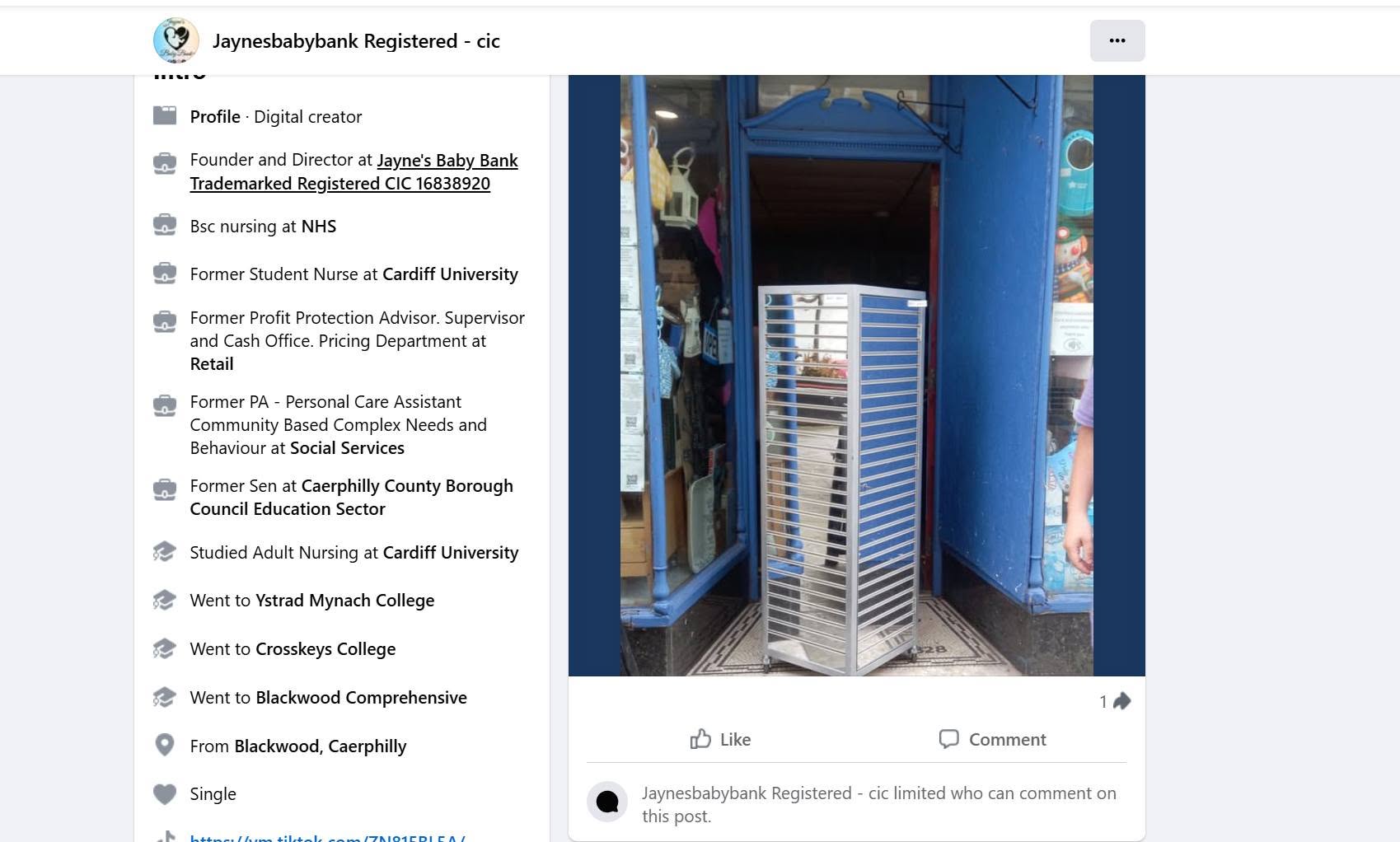
Her public profile has subsequently carried further professional descriptions, including “Bsc nursing at NHS”, “Former Student Nurse at Cardiff University”, “Studied Adult Nursing at Cardiff University” and a previous role described as a personal assistant or personal care assistant dealing with community-based complex needs and behaviour at social services.
These are not isolated historical statements. They form part of a professional history that has changed and expanded repeatedly over time.
That is why the archive matters. A profile can be changed. A Facebook post can be edited or deleted. A historical record preserves what was actually claimed at the time.
Yesterday’s profile update does not erase yesterday’s version.
So we asked the organisations
This is where the investigation differs from simply repeating something found on Facebook.
When JBB invokes a health board, the obvious question is whether the health board actually confirms the relationship.
When social services are presented as an organisation with which Carrie-Anne has professional authority or involvement, the obvious question is whether social services confirms it.
In relation to social services, the response obtained by the investigation was clear: there was no endorsement and no involvement.
That matters because it places the public claims alongside the response of the organisation supposedly involved.
She says it. We check it.
The hospital connection needs the same scrutiny
JBB has also published photographs and posts showing its branded activity inside hospital settings, including displays involving books, nappies and baby items.
A photograph of JBB material inside a hospital establishes that JBB-branded material was present there. It does not, by itself, establish that the NHS or a particular health board formally endorses JBB, employs its representatives or has entered into a partnership with it.
That distinction is important because JBB’s own wording has repeatedly gone considerably further than simply saying that its items were present in a hospital.
Again, the question is not whether a photograph exists.
The question is what the underlying relationship actually was.
Then there is Crane Street
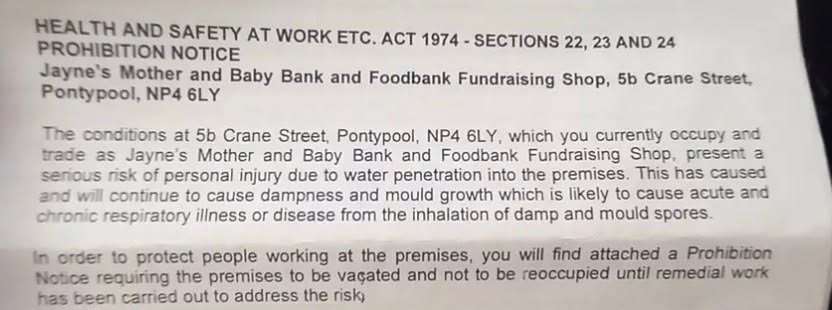
The recent events at 5 Crane Street provide another example of why the timeline matters.
Environmental health documentation recorded serious risks associated with water penetration, dampness and mould growth, with the premises prohibited from being occupied until remedial work was undertaken.
JBB subsequently advised people who had been inside the premises since November 2025, particularly volunteers, to contact their GP for a respiratory baseline.
At the same time, stock was being moved from the premises.
JBB later distributed baby goods and nappies in other settings, including hospitals.
That does not establish that contaminated goods were distributed, and we are not making that claim.
It does, however, create a legitimate public-interest question:
What assessment was carried out on stock from premises affected by damp and mould before it was moved, stored or distributed elsewhere?
That question is especially reasonable when JBB itself recognised enough potential respiratory concern to advise people who had been in the premises to seek a medical baseline.
Five years of charity branding
There is another timeline which cannot simply be rewritten by a later registration.
JBB used terms including “charity”, “charity shop”, “charity boutique” and “food bank charity” extensively across its public-facing material for years.
Yet Jayne’s Baby Bank C.I.C., company number 16838920, was not incorporated until 7 November 2025.
A Community Interest Company is not the same thing as being a registered charity, and incorporation as a CIC in November 2025 does not retrospectively turn the preceding years into registered-charity operation.
The archive therefore preserves two separate facts: years of public charitable branding and a CIC incorporated in late 2025.
The later registration does not erase the earlier record.
The bigger picture
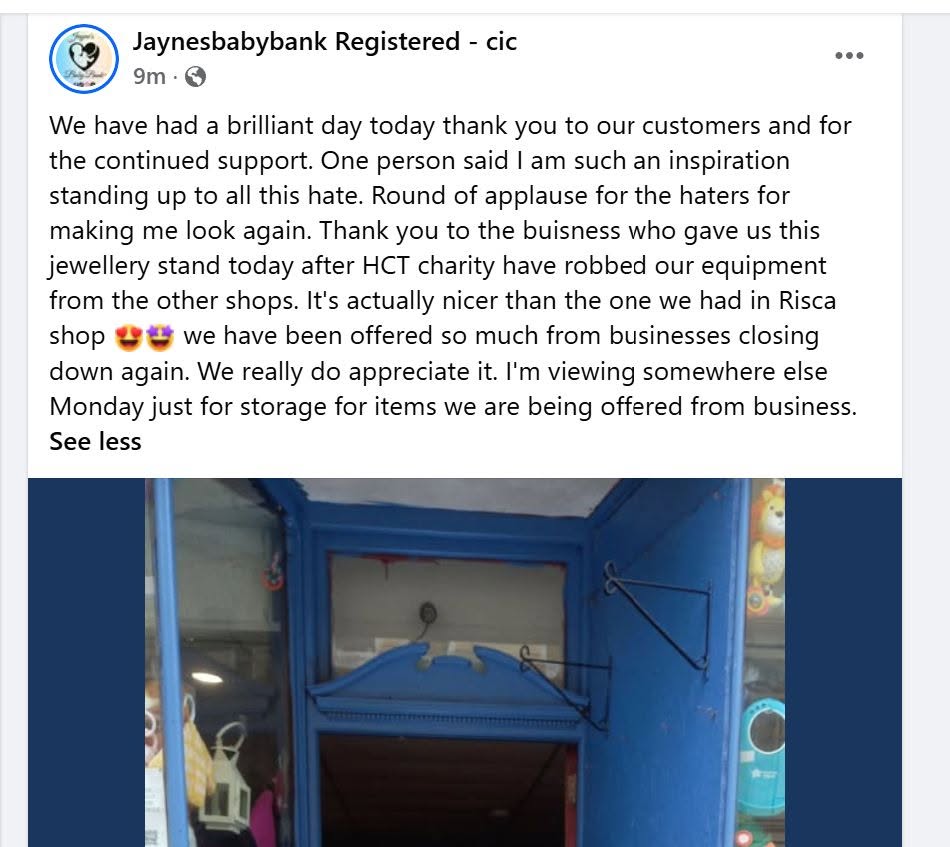
Put together, these are not simply a collection of unrelated Facebook arguments.
They show a recurring mechanism.
A dispute occurs. A public post follows. A person or organisation is identified. Serious language is used. CCTV, police, councils, health boards, social services or other authorities may be referenced. Followers are given a version of events.
Sometimes the underlying evidence is produced. Often, the audience is simply told that evidence exists.
Then, as circumstances change, the wording changes too.
That is precisely why preserving the original material matters.
This is why the archive exists
None of this requires us to decide every dispute ourselves.
Where there is an allegation, we identify it as an allegation. Where there is an official record, we show the record. Where an organisation has denied a relationship, we document that denial. Where a claim changes, we preserve both versions.
The Facebook archive is particularly important because the material is not static. Posts disappear. Profiles change. Descriptions are rewritten. Claims evolve.
Without an archive, the latest version can easily become the only version people remember.
With an archive, the public can see the timeline for themselves.
She posted it. We kept it.
For years, Facebook has been used by Jayne’s Baby Bank to publish its side of disputes, identify critics, make accusations, invoke CCTV, reference authorities and establish its own professional and charitable credentials.
The recent posts show that this approach has not disappeared.
What has changed is that there is now a record of it.
The investigation did not create the claims.
It did not write the posts. It did not create the changing profiles. It did not manufacture the references to health boards, social services, hospitals, CCTV or safeguarding.
It did not create Raymond Derek Watkins’ criminal record or his own public online material either.
It preserved the evidence and put the pieces into context.
That is the difference between an accusation and an evidence trail.
Anyone can change their story.
They cannot change what they already posted.
She says it. We check it.
The archive is not the attack. The archive is the record.
… Sherlock!