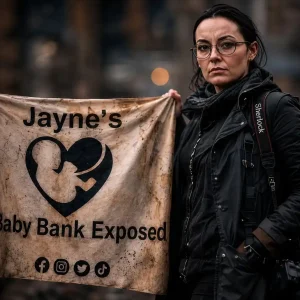
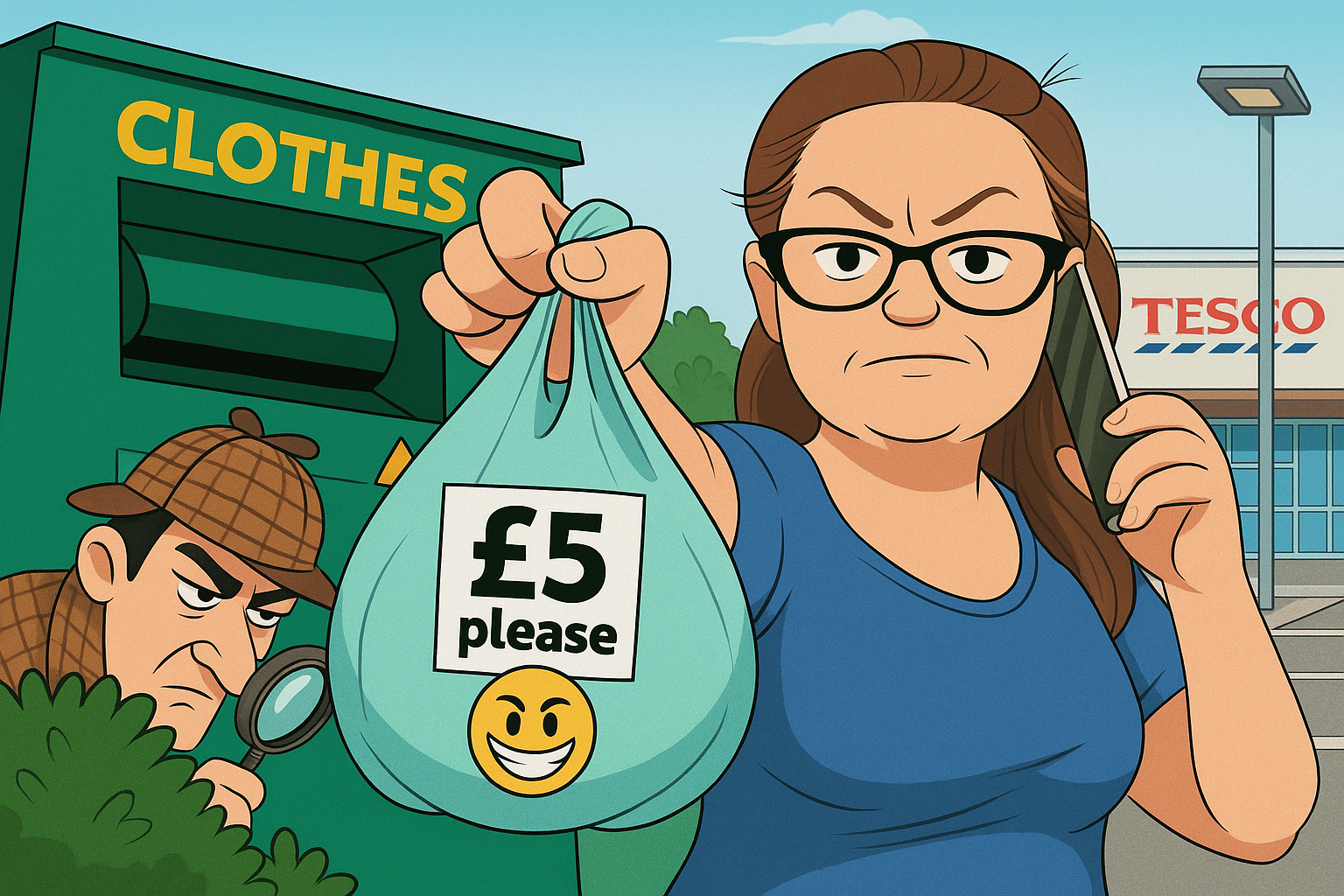
For more than a year, the organisation operating under the name Jayne’s Baby Bank has prompted growing scrutiny from the public, donors, and local authorities. Led by Carrie-Anne Ridsdale — also known as Jayne Price — the project presents itself at times as a charity, at others as a business, and frequently as a hybrid of the two. However, a number of statements made by its founder raise questions around consistency, accountability, and transparency.
Most recently, Ms. Ridsdale posted the following update on Facebook:
“I have 3 food good to go bags £5 each and some bread which is free at Pontypool shop this morning.”
On the surface, this appears to be a routine food resale or redistribution notice. However, it sits in stark contrast to her previously stated views regarding food banks and the ethics of charging for redistributed food. In past posts, she expressed strong views against other foodbanks that charge for food, suggesting such actions are inappropriate or exploitative. For example:
“Foodbanks don’t charge vulnerable people for food. If you are paying for food at a ‘foodbank/pantry’ they are a food business. Wake up. Stop supporting them profiting off vulnerable people and children.”
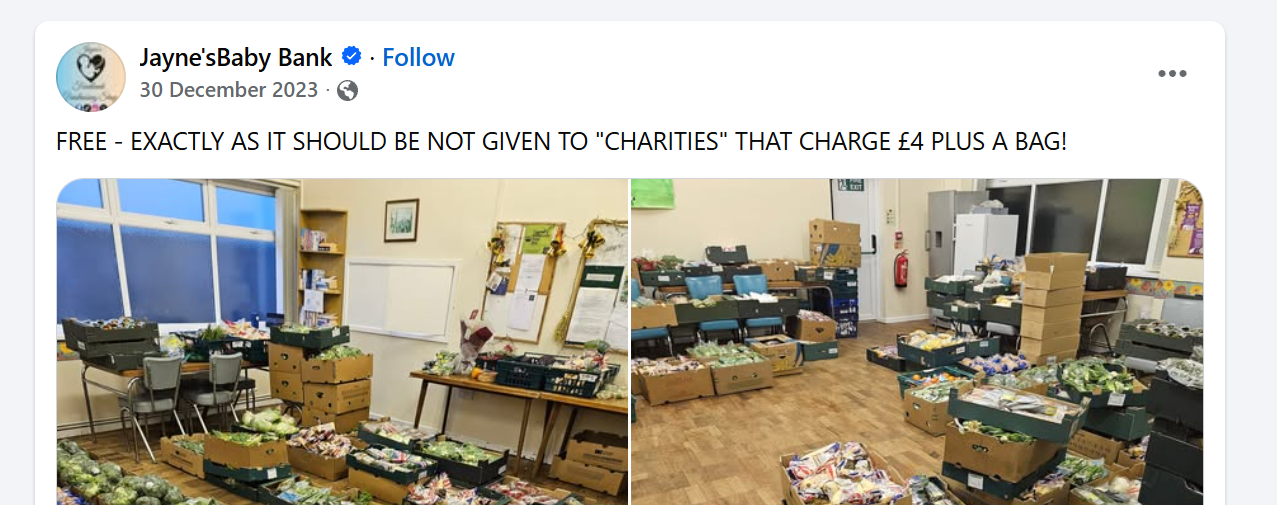
“FREE — that’s how it is meant to be given out, not £5 a bag, £2 a month subscription like the Pantri in Risca. They are a food business not paying for food stock…”
“These so-called ‘registered charities’ are charging £5 and up for food thrown out by the supermarket… Don’t support these charities — support us.”
“Selling out-of-date food is illegal.”
“Not many FREE foodbanks or people gifting food out for free anymore — everyone is capitalising on charging people for foodbanks.”
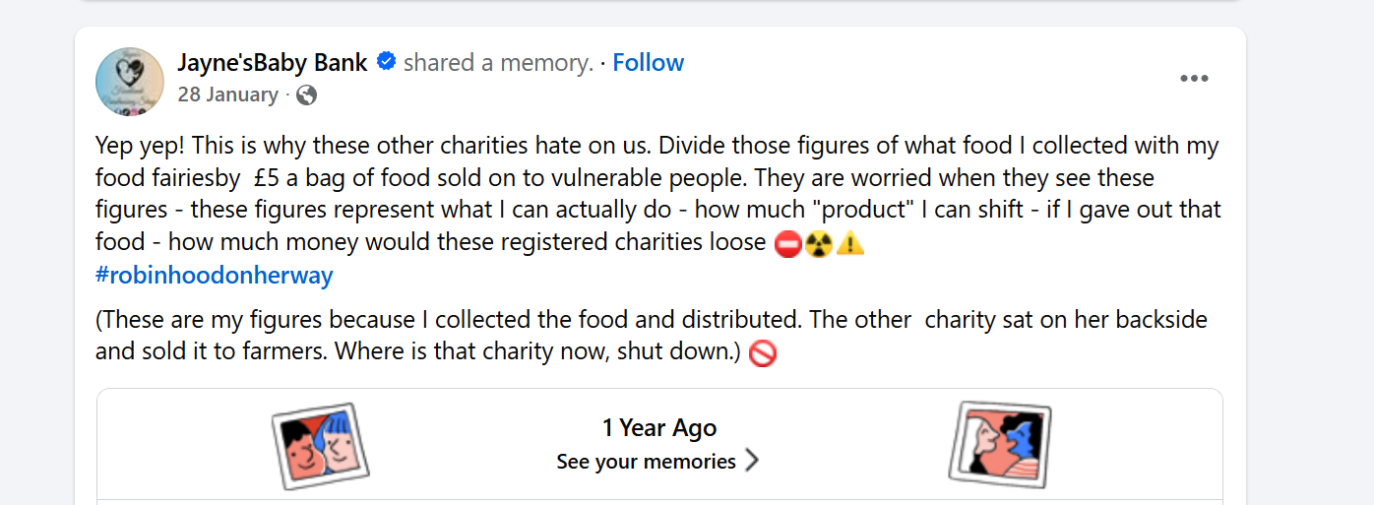
Despite these clear and critical public statements, Ms. Ridsdale has, in her own words, confirmed that food from Jayne’s Baby Bank is at times resold or redistributed for a fixed fee:
“Yep yep! This is why these other charities hate on us… These figures represent what I can actually do — how much ‘product’ I can shift — if I gave out that food, how much money would these registered charities lose.”
This sequence of posts raises valid public interest questions about:
- How food donations are being processed, labelled, and redistributed
- Whether vulnerable families are receiving food for free or being charged
- How this activity aligns with previous criticisms made of others in the sector
- Whether the language used to describe operations — e.g. “charity shop”, “foodbank”, “business” — is consistent with actual registration status
For context, Jayne’s Baby Bank is not currently listed as a registered charity with the Charity Commission. Furthermore, previous articles on this site have examined whether the use of “charity shop” branding may mislead the public in absence of verified charitable registration (source).
A Pattern of Contradiction?
Ms. Ridsdale has made numerous claims over time — including holding a nursing degree, biochemistry diploma, and even progressing towards a PhD. These statements have been scrutinised in a previous fact-check, which identified inconsistencies and confirmed that certain qualifications could not be verified with the issuing bodies cited.
The recurring issue is not simply the nature of the claims — it is their volatility. Social media posts are sometimes deleted or edited when inconsistencies are highlighted, but public interest concerns remain, particularly when activities involve public donations, food redistribution, and references to healthcare qualifications.
Transparency Matters
Jayne’s Baby Bank maintains a strong online presence and frequently posts appeals, livestreams, and statements relating to its mission and critics. While some supporters argue that any help to struggling families is a net positive, others — including regulators, donors, and local businesses — have expressed concerns about:
- Lack of formal oversight or external auditing
- Frequent changes in how the business is described (CIC, charity, shop, foodbank, etc.)
- Use of “volunteers” in ways that may not comply with UK employment law
To be clear, there is no evidence of criminal wrongdoing — but the pattern of conflicting statements and shifting status warrants careful review, particularly given the vulnerable populations involved and the legal requirements around food hygiene, fundraising, and business operations.
Conclusion
The key concern is not whether Jayne’s Baby Bank has done some good — many supporters clearly believe it has — but whether it is operating with the transparency and consistency expected of any organisation asking for donations, redistributing food, or publicly calling itself a “charity.”
Contradictions in messaging — such as criticising others for charging for food, then doing the same — may erode public trust. As scrutiny grows, so too does the importance of accurate, consistent public communications and demonstrable legal compliance.
If you are new to this topic, we encourage you to start at our homepage, where you’ll find sourced reports, video archives, and transcripts documenting this story in detail.
Sherlock